 |
The Greek Age of Bronze
Body-Shields |
 |
One of the most striking equipment of the Bronze Age Aegean's weapons of defence was the huge shield which covers almost the entire body of the warrior. In the archaeological sources three main types of this shield are attested : a) The elongate rectangular one known as "tower shield", b) the two lobes one known as "figure- of- eight shield" c) the round or oval one with two cuts on sides which could be named as "proto-Dipylon shield". These type of shields genericaly called "body-shields" were more likely made of several layers of hide probably placed on a wicker structure, bronze, tin or wood reinforcements could have been also placed on their external surface.
These shields are well represented since the early period of the Late Helladic when their utilization was at the apogee. With the introduction of the bronze armour the large body-shield seems to be less utilized even if it didn't completelly goes into disuse as attested in a pottery fragment dated around LH IIIB (1300-1250 BC) and in some Iliad descriptions (*1).
Indeed the "figure- of- eight shield" remained as decorative motif and cult symbol till the end of Late Helladic period, while the large round or oval shield with two cuts on sides, which was named by the scholars as "Dipylon shield", was still used during the Geomeric period. |
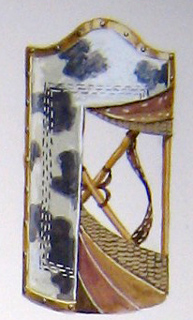 |
One of the most common type of Achaean early body-shield was the as called "tower shield". It is represented mainly on wall-paintings and rings and so far in only one late pottery as defence weapon.This shield was probably composed by an internal wood structure fastened to form a cross. Several layers of toughened bull's hide were glued and stitched to a wicker structure. In a couple of "Warriors' graves" from Haghios Joannis and Knossos dated around the middle of 15th century BC several fragments of copper wire shaped as staples have been found. These wires could have been used to joint together the several layers of hide of a body-shield and it is more likely the only survived element of a perishable material body-shield used in that time. A rim probably made of leather or bronze was normally placed around the shield. Based on some representations we can't exclude that externally this shield was in some case covered with a thin embossed or decorated bronze plate. Internal grip and baldric were used by the warrior to properly handle the shield. |
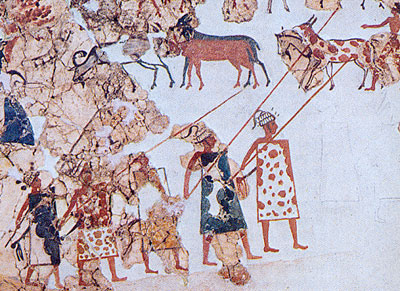
The earliest evidence of the large rectangular shield "tower shield" is from a fresco from Akrotiri in the Thera island. This fresco was clearly painted before the destruction of the Island by an earthquake followed by the volcano's eruption which based on the most recent analysis seems occurred not later of 1600 BC. In this fresco a row of warriors with long spears, swords, boar tusk helmets (see also the page dedicated to the early helmets) and rectangular body shields are depicted.
These kind of shields were probably made of hide, in this case must have consisted of goat-hide as the skin of some goats shown in the same fresco depicted with the same colour-pattern of the shields' surface. |
 |
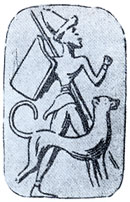 |
In a seal stone from Knossos dated at the end of the Middle Minoan period (about 1600-1550 BC) a warrior or deity with a rectangular shield is shown. Because of its small size this shield can't be considered a body-shield indeed it seems to be a short version of the tower shield used during the same period. |
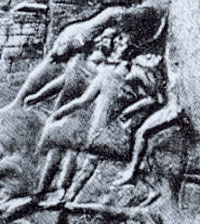
| In Greece mainland the earlier representation of tower shields are from the circle A shaft graves in Mycenae dated from LH I to LH II (about 1550-1500 BC). In the silver "rhyton" from Mycenae shaft-grave IV dated LH IB two warriors seem protected by short tower shields with double upper edge. |
 |
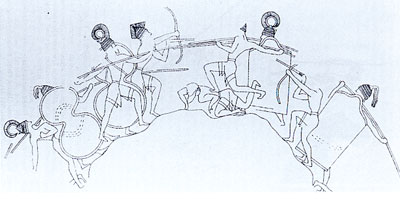 |
In another silver "Rhyton" from shaft-grave IV a beautiful battle scene is represented. Two warriors are clearly equipped with tower body-shield also in this case with double edge. This could be interpreted both as the hides fold area and relevant seam line or a thin bronze rim reinforcement.
On this "Rhyton" "Figure- of- eight shield" and different type of boar tusks helmets are also well represented (see also the page dedicated to the early helmets) |
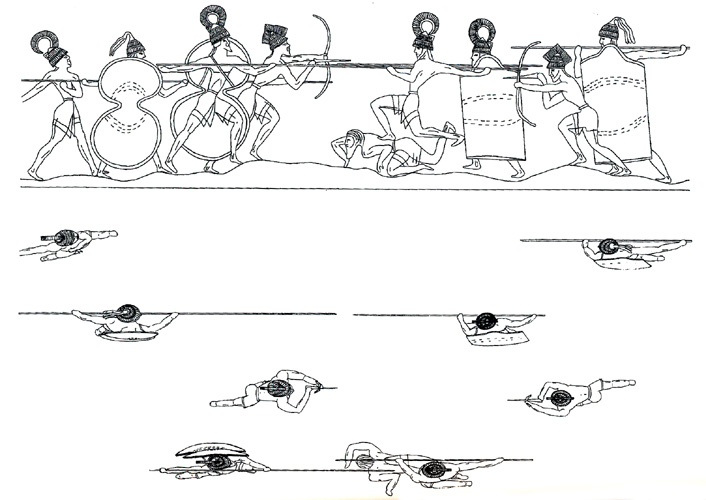 |
As well explained by Dr. Fritz Blakolmer on his article about this "Rhyton" (*1a): The frieze-like image on this silver krtaer is composed by two antithetical groups of four warriors in different poses showing bold overlappings and giving the impression of an arbitrary snapshot. In the dramatical gap in the centre, below the horizontal lances, lies a ninth warrior already fallen and belonging to the group to the right. Although this combat appears at frst glance well-balanced, the fallen warrior rather allows defining the troop to the right as the losing one. Both groups of warriors show more common features than diferences in their outward appearance. As far as preserved, all figures are barefooted and wear a pointed beard and some kind of shorts- all well-known from contemporary images from the Greek mainland and from Minoan Crete. This holds true also for the boar's tusk helmets and their varyng top pieces. Of eight standing warriors five are carring long lances and are armed with arrow and bow. Four warriors are carrying large body shields made of ox-hides.
It seems that these great man-covering shields of the earlier Achaean age were not carried on one arm but slung by a belt from the shoulder, while the long spear gives employment enough to both hands. This recalls the statement of Herodotus, who tells us thta the Carians invented the shield handles, and that "in the earlier times the shield was without handles, and was managed by means of a leather thong, by which it was slung around the neck and the left shoulder". |
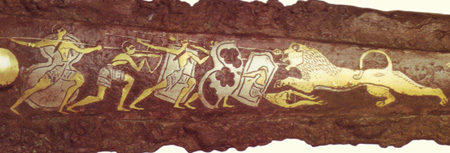
| One of the most famous representation of Achaean warriors is on the central rib of the "Lion Hunt" dagger always from the shaft-grave IV in Mycenae (see also the page dedicated to the swords and the daggers).In this dagger two tower and two "figure- of- eight shield" are represented. The internal parts of these body-shields are also visible with the relevant baldric "Telamon"(*2). The double edge is present all around the shields perimeter both inside and outside possible representation of a thin bronze rim reinforcement. |
 |
| In one of the shaft-graves were found considerable length of the bronze rim of some perishable object, of more than hemispherical cross-section, corrugated transversely like a flexible hose pipe, and transfixed at intervals by bronze nails, point inwards, which had secured the rim to the margin of a sheet of some perishable substance. These objects could represent more likely the rim of one or more shields of ox-hide. such as is represented in the "Lion Hunt". |
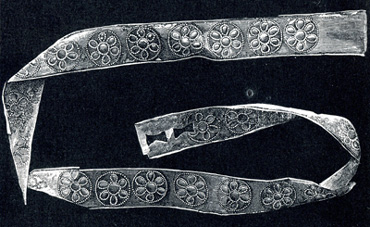 |
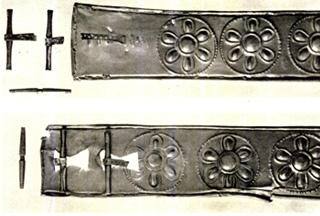
Possible evidence of a shield shoulder belts "Telamon" comes from the shaft-grave IV where three gold shoulder belts have been found. One was broad without any ornamentation, the other two had on either side a small border produced by the turning down of the gold plate, and were ornamented with an uninterrupted row of rosettes. These "Telamon" were about 140 cm (4 1/2 ft.) in length and 4 to 5.5 cm (1 7/8 to 2 1/3 in.) broad. Of course these kind of shoulder belts could also have been used for sword's scabbard suspension (see also the page dedicated to the swords). |
| These thin gold bands have to be intended as the decorative elements of some thicker leather "Telamon". At one extremity of these belts there are two apertures in form of keyholes, which served to fasten the clasp which was attached to the other extremity, as is shown by two small cuts and a small hole. As evidenced in other findings this fastening system was also used for the belts or in some suspension system for the sword's scabbard.
|
 |
|
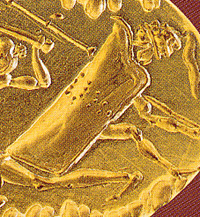
From the same grave comes a gold ring representing a battle scene. One of the warriors is completely protected by a tower shield with several embossed dots on the external surface. These could be interpreted as the decorative elements of a thin bronze plate placed as additional reinforcement,(3*) or the studs used to joint together the several layers of hide. |
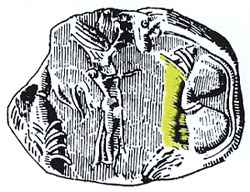
| A tower shield with upper double edge is represented on a seal from Zakro Crete dated around LM II (about 1500-1450 BC). In this seal a "figure- of- eight shield" and an helmet are also recognizable. The tower shield has been painted in yellow for an easier identification. |
 |
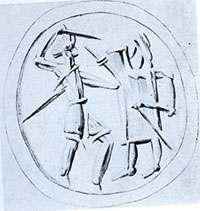 |
On a questionable seal stone from Creta dated around LM II (about 1500 BC) the warrior on the right seems to be equipped with a spear an a rectangular body-shield. Also in this case the double edge is represented. |
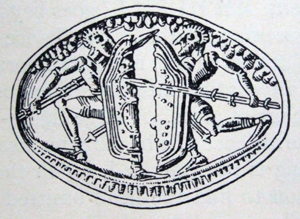
Two rectangular body-shields are represented on a gold ring part of the controversial "treasure of seals" from Thisbe(*4).
The frontal surface of these shields is decorated with bosses and double edges are also present. The surface of the right shield seems also decorated with an engraved representation of a shield in figure-of-eight. Also in this case the external surface seems made of a thin decorated bronze plate covering the entire surface of the shields. |
 |
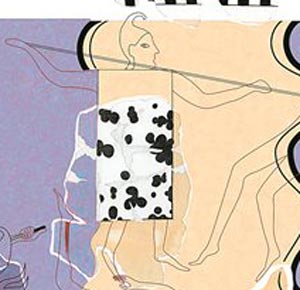 |
A possible tower shield is also represented on a fresco fragment from Pylos dated LH IIIA/B (about 1350 BC).
A Similar rectangular incomplete element flecked with spots is also represented on a fresco fragment from Tyrins |
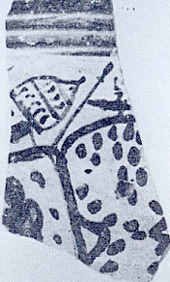
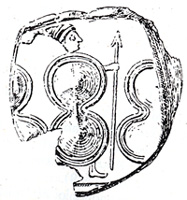
| The latest representation of body-shields so far attested is from a pottery fragment from Tiryns dated LH IIIB (around 1300-1250 BC). This specimen is very important because it is the only tower shield represented on pottery. Furthermore this fragment attested how the body-shields both rectangular and in figure- of- eight were still in use (even if probably in few quantity) in a time when the elaborate bronze armour where widely used as well. In this painting the ox-hide which cover the shields is more likely represented as well as the boar tusks helmet and the javelin. |
 |
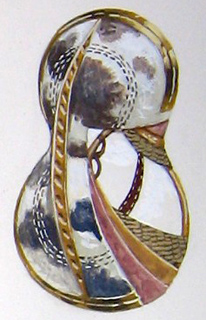 |
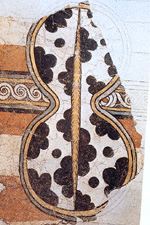
The most common type of Achaean body-shield was the figure-at-eight shield. It is represented on pottery, wall-paintings and sculpture both as defence weapons and decorative motif or cult symbol.This shield was probably composed by two internal bow-shaped piece of wood fastened to form a cross. Several layers of toughened bull's hide (*5) were glued and stitched to a wicker structure. In a couple of "Warriors' graves" from Haghios Joannis and Knossos dated around the middle of 15th century BC several fragments of copper wire shaped as staples have been found. These wires could have been used to joint together the several layers of hide of a body-shield and it is more likely the only survived element of a perishable material body-shield used in that time. A rim probably made of leather or bronze was normally placed around the shield as well as a longitudinal central reinforcement which based on some colourful representations it could have been made of bronze, tin or wood. Internal grip and baldric were used by the warrior to properly handle the shield. |
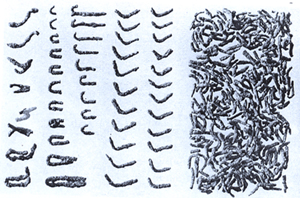
| A group of ca. 150 staples in copper have been found in Tomb V at the New Hospital Site at Knossos. As the excavators believed these staples may have probably fastened the body shield ox hide layers to each others or to its wooden frame. Somewhat later, however, after the discovery of similar fragments in a warrior grave near Ayios Ioannis it has been also suggested that because of their blunt ends the staples were more suited to attaching leather to leather, as in a helmet. Indeed their utilization to joint the ox hide layers of the shields seems more reasonable being the metal wire used to stitch the shields' ox hide layers also attested in the Iliad (*6). |
 |
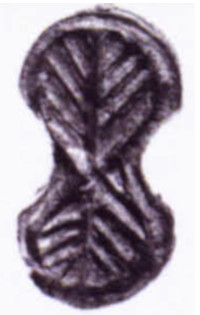 |
The earliest figure-of-eight motif appears on this 'paste' seal from Crete. It dates to EM 11- MM IA. Indeed it cannot be said with certainty whether this is the image of a shield or not. (*6a). |
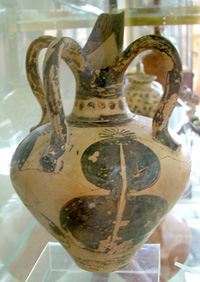
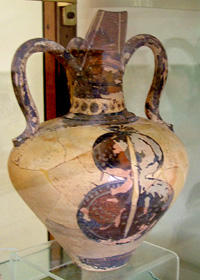
| One of the earliest representation of body-shields in figure-of-eight are present in a pottery from Akrotiri Thera dated in the same period (LM-IA) of the above shown fresco. These threehandled jugs, probably Minoan imports, are decorated with body-shields in figure-of-eight which seem hanging from a wood lintel. The shields are well represented with a central longitudinal strip and several bosses or seam elements used to fastener the hide layers. |
 |
 |
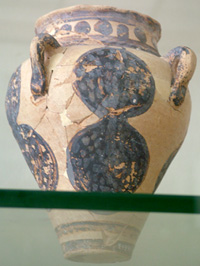 |
Similar shields in dark colour with white spots are depicted in a vase from Knossos dated around the LM IB (about 1500 BC). Also in this case the shields seem hanging from a wood lintel represented around the vase's collar with two dark lines and in between several dots simulating the cross ridgepoles. |
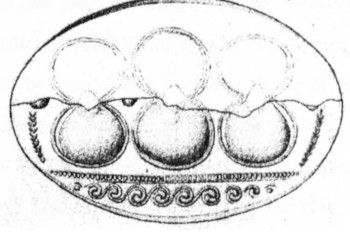 |
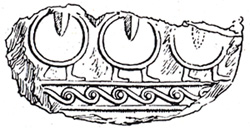
A LM II-IIIB metallic' ring comes from Kalyvia and depicts three figure-of-eight Shields. |
In the Greece mainland the earliest representation of body-shield in figure-of-eight are from the circle A shaft-grave in Mycenae dated from LH I to LH II.
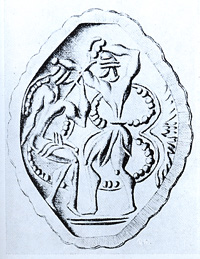
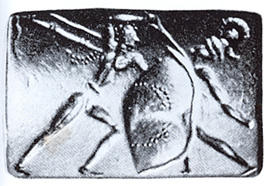
In a seal from grave III two warriors equipped with body-shields in figure-of-eight are represented. The shields show several bosses all around the edge, possible metal reinforcements placed on the leather rim. |
 |
 |
In another seal from the same grave a duel is also represented. One of the warriors is almost completelly covered with a body-shield in figure-of-eight in this case shown in its lateral view. The shield has an external circle of bosses which could be interpreted as reinforcements or fastener elements used to joint the several layers of hide.
The shape of the shield helps us to understand how one could bivouac under its great concave on a frosty night as attested in the Odyssey (*7) |
| |
|
As already mentioned in the section dedicated to the tower shield, a beautiful representation of body-shields are from a silver "rhyton" and the decorated "Lion Hunt" dagger both from the shaft-grave IV of Mycenae. In these representations the external and internal surfaces of the shields in figure-of eight are visible. The baldric used to carry the shield is well represented in both the representations as well as the bull-hide spots are clearly depicted in one of the dagger's shields.
The notched shield of one of the lion-hunters seems distinguished by stras set in the silver field; some scholars thinks that some of the large double stars of gold from the Royal Graves had served the same purpose, while others have offered a like conjecture regarding the lion-mask and the great silver ox-head. |
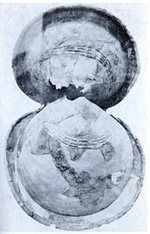
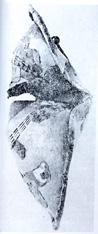
| Always in the shaft-grave IV of Mycenae a big silver votive shield in figure-of-eight has been found. This specimen 35.5 cm in high is equipped with an internal hook used to hang the shield on a wall. In this representation the seam line in the central area of the shield is well visible. |
 |
 |
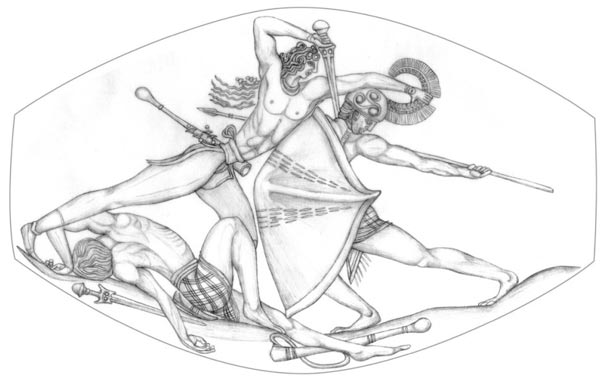
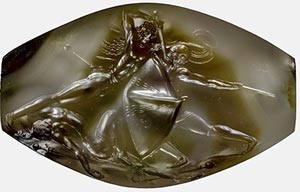
| In the rich warrior grave in Pylos dated around 1500-1420 BC a beautiful Minoan or early Achaean agate shows one of the warrior with a well represented figure-of-eight shield.(*8) |
 |
 |
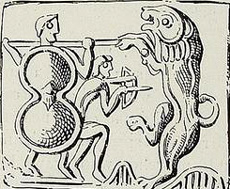
| A similar lion hunting scene with spear man bearing a figure of eight body shield and archer is represented in this seal from Kydonia probably also dated 16th Century BC |
 |
 |
 |
In a couple of seal stone from Haghia Triada and Knossos dated between TM IB and TM II (about 1550-1500 BC) the utilization of body shields in figure-of-eight is also well represented. |
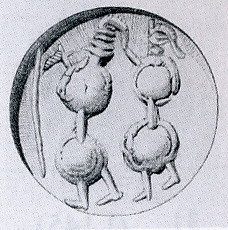 |
Found at Mavro Spilio at Knossos, a steatite sealstone portrays two very schematic human figures behind large figure-of-eight shields. They move to the left and wear helmets with plumes. The left figure carries a spear or staff. Its date is disputed, as Daniilidou suggests a LM III date, while Nicnieier states 'it may well be of' LM I date.
The latter date seerris more plausible, especially bearing In mind sealing other similar sealing. |
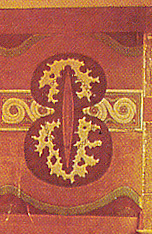
| From Knossos some wall paintings dated about LM II and LM IIIA1 (about 1500-1350 BC) which have been restored by Arthur Evans show colourful shields in figure-of eight. Similar example of body-shield used as decorative motif have been also discovered in Tiryns, Mycenae and Thebes |
 |
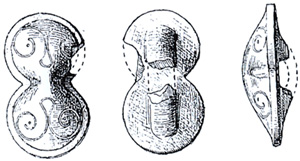 |
From Knossos comes this interesting pendant dated LM IIIA (about 1370 BC) representing a shield in figure-of-eight. In this specimen a recurrent Achaean decorative motif is present on the external surface of the shield. |
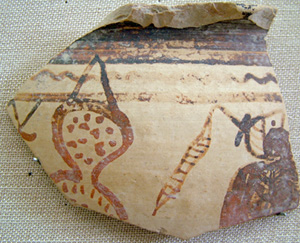
| In this pottery fragment always from Knossos dated about at the end of the second palace period (about 1380 BC) a shield in figure-of-eight hanging from a wood lintel is depicted. On the right a warrior with an interesting helmet is also shown (see the page dedicated to the middle helmets) . |
 |
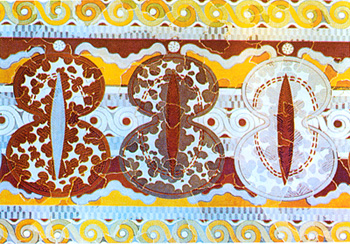 |
The better-preserved and restored shield fresco, of which over two hundred fragments were found, is from the Inner Forecourt of the Old Palace at Tiryns.The painting shows the seam line and the central elongate boss which in the real shields could have been made in bronze, tin or wood. |
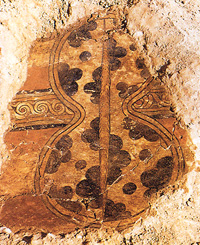
| Excavation in the Cult Center at Mycenae have furnished the best example of emblematic figure-at-eight shields in Greece mainland wall painting. They are much larger than the shield at Tiryns about one-half lifesize also well represented is the ox-hide covering and the elongate boss.
|
 |
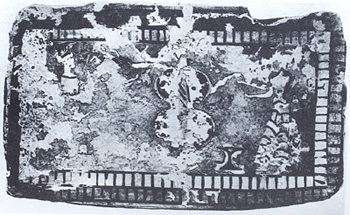 |
The body-shield in figure-of-eight becomes the symbol of the Warrior Goddess of the citadel of Mycenae, as she was also represented in the central figure on the stucco plaque from Tsountas' House nearby. |
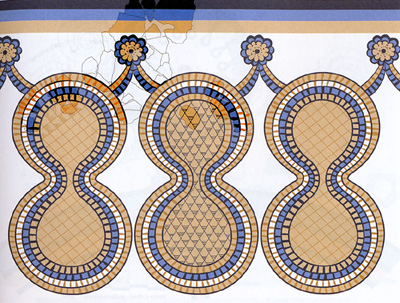
| Unusual body shields in figure-of-eight are represented in a wall painting dated XIII century BC found in the staircase 54 of the Pylos palace. The shields are represented suspended by woven cloth attached with hangers in a shape of rosette. The central part of these shields, enclosed by four successive bands, was marked by parallel bars painted red or black which could be intended as made of interlaced wicker. Some scholars have also hypothized that the central part of these body shields could have been made of several layers of quilted cloth or linen.
|
 |
| A small fragment of a shield from the older Kadmeia at Thebes was recognized by Rodenwaldt as part of a shield in figure-of-eight. It shows part of the gray spotted hide with red stitching, and was apparently identical to the Knossian example in size. |
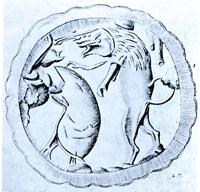
| An interesting representation of a body-shield in figure-of-eight is on a seal stone from Vafiò near Sparta dated LH II. The scene represent a warrior fighting against a lion. The surface of the shield seems to be damaged by several tears.
|
 |
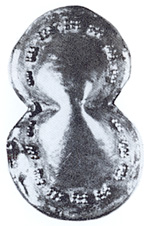 |
A gold pendant from Pylos dated LH II manufactured in a figure-of-eight shield. The seam lines or bosses elements have been also clearly represented. |
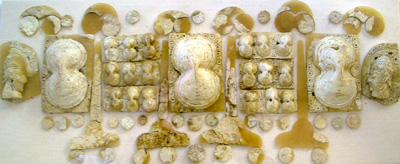
| Several ivory objects manufactured in a figure-of-eight shields and boar-tusk helmets dated around XIV century BC have been found in the side-chamber of Tholos Tomb A in Arkhanes .
|
 |
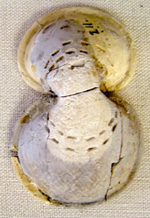 |
Another ivory object from Crete dated LM II manufactured in a figure-of-eight shield shows the seam lines well represented. |
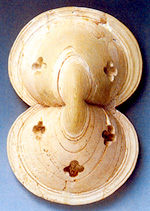
| Another ivory objects manufactured in a figure-of-eight shields from Mycenae dated around LH IIIA shows carved areas in shape of flower where stones of different colour were placed to simulate the hide spots.
|
 |
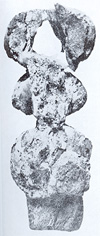 |
A very interesting ivory object for Mycenae dated LH II. It is probably the upper part of a sceptre representing a shield in figure-of-eight with an upper ring with a triangolar hole. |
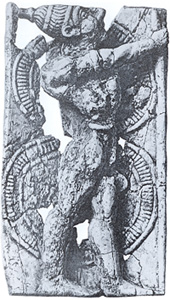
| In this ivory plate from Delos dated LH IIIA/B (about 1350 BC) a warrior equipped with boar tusks helmet and body-shield in figure-of-eight is represented. The shield seems to have a reinforced internal rim. This specimen together the above mentioned pottery fragment from Tiryns gives evidence that the body-shields were also used during the late periods of the Late Helladic.
|
 |
 |
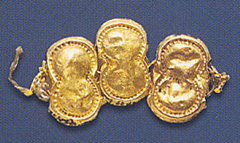 |
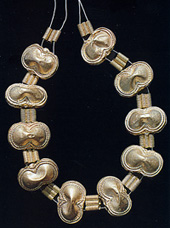
The Achaean influence in the Cypriote area is well attested in these gold neck-laces elements in figure-of-eight shields dated Late Cypriote II (1450-1200 BC) respectively from Enkomi and Pyla-Kokkinokremos. |
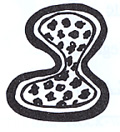
| In the Cyclades as well as in Cyprus there are also evidence of body-shield in figure-of-eight depicted on pottery. Similar decoration is also present in a vase from Gezer Palestine. these pottery are dated in a period between the TM IB and TM II/IIIA (about 1500-1370 BC).
|  |
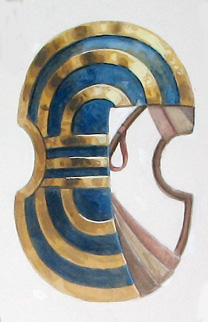 |
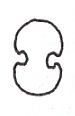
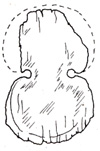
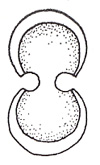
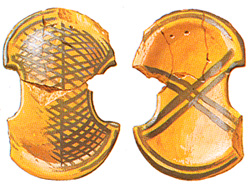
Another type of body-shield used during the late Helladic period is the circular or oval one with two cuts on both sides which allow a better utilization of the shield during the fighting with sword and spear. This shield, sometimes wrongly confused with the one in figure-of-eight, was still utilized during the Geometric and Archaic times and it was generally known by the archaeologist as "Dipylon shield". Taking this denomination as reference we can thus conventionally named the Late Helladic variant of this shield as "proto-Dipylon shield". Like for the tower and the figure-of-eight shields also this body-shield was probably made of several layers of hide probably sewn to a wicker frame and sometimes reinforced with metal bosses or plates placed on shield's external surface and edge.
|
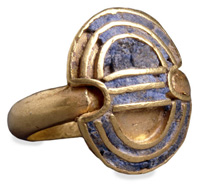
| The earliest representation of a proto-Dipylon shield is present on a gold ring part of the "treasure of Aigina" from Crete probably dated around TM I (about 1550 BC). |
 |
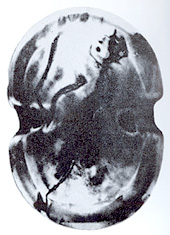 |
A beautiful proto-Dipylon body-shield is represented in this pendant from Crete probably dated TM II (1500 BC). |
| Other representations of proto-Dipylon body-shields are respectively from a glass-like pulp from Crete, a ivory pendant from Menidi, and a stone sculpture from Mycenae probably dated LH IIIC. |
 |
 |
 |
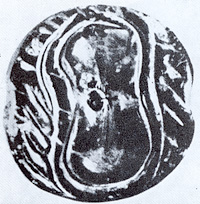 |
A possible representation of a proto-Dipylon body-shield is on this seal dated around LH IIIC where an oval body-shield a little cruched on sides seems to be represented. The lines motif all around the shield has been also interpreted as decorative fringes which have been represented in other type of Achaean' shield (see the page dedicated to the other shields) |
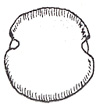
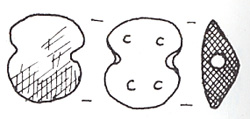
| Two other representations of Achaean proto-Dipylon shield are visible on two pendants respectively from Eutresis Beotia and from a grave in Athens both dated LH IIIC (actually two similar pendants in shape of proto-Dipylon shields have been found in Athens). Even if no references about the real dimension are present these were more likely medium size shields and no body-shields. |
 |
 |
| In the Syro-Palestinian location of Megiddo five ivory object dated XIII century BC in shape of proto-Dipylon shields have been found. Considering that the ivory objects from this area have closer affinity with the Aegean world we can't exclude that these elements are representations of shield utilized in the Late Helladic area. |
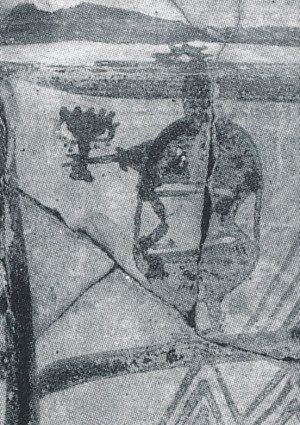 |
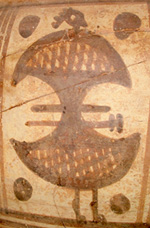
A warrior with Proto-Dipylon body shield is depicted on a pyxis of Proto-White Painted Ware , from Nicosia Cyprus dated 11th century BC. |
As above mentioned this type of body-shield was the only one which survive beyond the end of the Bronze Age being still represented on pottery and sculpture during the Geometric and Archaic periods. Similar type of shields even if not necessarily body-shields are represented till the 5th century BC. These later type are also known as "Boeotian" shields.
The above mentioned elements show as the "Dipylon shield" of the Geometric period was not a direct descendant of the Achaeans' body-shield in figure-of-eight being the "proto-Dipylon" already in use during the Late Helladic in contemporary with the others body-shields. |
 |
 |
| CONCLUSION
|
The body-shield in the three main variants was one of the most popular Aegean defensive weapon which utilization is attested since the 17th BC. Even if the early representations of body-shields have been so far discoverd in Crete, the exact origin of these huge shields is still under debate. The archaeological elements are in fact not sufficient to determinate if these shields took origin in the Minoan area or in Greece mainland than later imported in Crete and the others Aegean island even before the Achaean's domination which occurred around 1450 BC.
The archaeological evidences show that the three variant of body-shield were utilized contemporary mainly in a period between the 17th and the 15th century BC.
With the introduction of the bronze armour the utilization of this huge body-shield was less common even if not completely abandoned being still represented during the LH IIIB (1300-1250 BC) as well as in the Iliad. Furthermore the body-shield denominated "proto-Dipylon" survived the end of the Bronze Age and it was the only body-shield still used during the Geometric and Archaic periods. This confirm how the Dipylon shield was not a direct descendant of the Achaean shield in figure-of-eight being this shield already used during the Late Helladic time.
Based on the pictorial representation, sculpture and Iliad description we know that these shields were made of several layers of hide more likely stitched to a wicker or wood structure. Some shield were sometimes reinforced with leather rim and metal bosses/plates placed on shield' s external surface and edge. The body-shield in figure-of-eight and the proto-dipylon were largely used as decorative motif on fresco, pottery, jewellery and ivory objects as well as cult symbols till the end of Late Helladic period.
|
(*1a) Fritz Blakolmer THE SILVER BATTLE KRATER FROM SHAFT GRAVE IV AT MYCENAE: EVIDENCE OF FIGHTING "HEROES" ON MINOAN PALACE WALLS AT KNOSSOS?; AEGAEUM 28 (2007)
|
(*3)Even if apparently a plate of bronze which cover a tower body-shield could seems too heavy, considering that the bronze average density is 8300 Kg/m3, a sheet of bronze 0.3 - 0.5 mm thick placed on the entirely surface of a body-shield would increase the total weight of the shield of about 3 - 4 Kg (about 7.5 - 9 lb). A bearable increase for a strong Age of Bronze warrior.
|
| (*4) The autenticity of the seal-stones from Thisbe "treasure of seals" is actually questionable, nevertheless their iconography model are significative and more likely are based on true specimens.
|
(*6) Iliad XII; 260-261 The several ox hide layers of Sarpedont's shield were stitched with golden wires..
|
(*6a) CMS VS. I A, no. 219; Pini in Marangou 1992: 210, no. 259..
|
(*8) Sharon R. Stocker and Jack L. Davis, The Combat Agate from the Grave of the Griffin Warrior at Pylos; Hesperia: The Journal of the American School of Classical Studies at Athens (2017).
|
|